
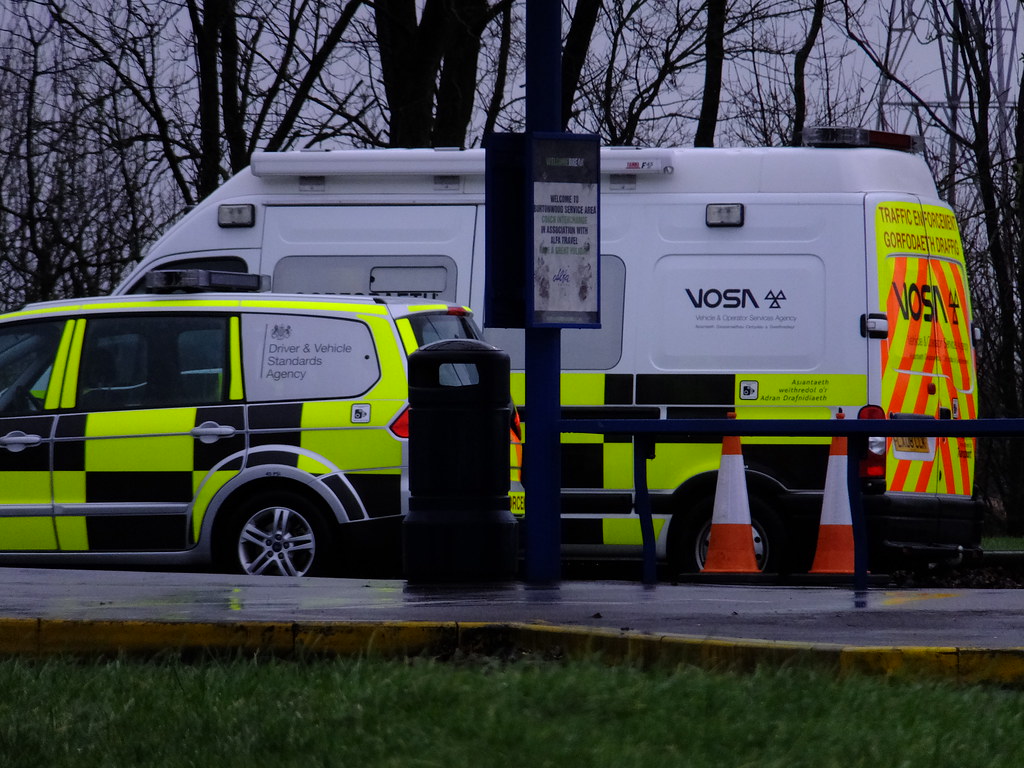
HGV Tachograph Offences: Fatigue in drivers is a serious issue. A tired driver can kill, which is why there are both EC and domestic regulations governing driver’s hours.
EC rules apply to drivers of most goods-carrying vehicles where the maximum permissible weight of the vehicle (including any trailer or semi-trailer) exceeds 3.5 tonnes. They apply to all journeys made entirely within the United Kingdom and the European Union. There are exemptions based on the type of vehicle or the type of work being performed.
When operating in the UK, any vehicle exempt from EC regulations is subject to UK domestic rules (unless exempt).
While these regulations are primarily intended to ensure road safety, they are also intended to ensure fair competition among Transport Operators.
Drivers Hours Rules
i. European: EC Regulations 561/2006
Daily driving time shall not exceed 9 hours, with an exception twice per week when it may be increased to 10 hours.
Driving on a weekly basis Not to exceed 56 hours.
Driving every two weeks Not to exceed 90 hours.
Daily rest should be at least 11 hours, but can be reduced to 9 hours three times per week. (Daily rest can be divided into two periods of at least three hours rest and at least nine hours rest)
After 4 hours and 30 minutes of driving, daily daily rest breaks of at least 45 minutes should be taken (this can be separated into two breaks of at least 15 minutes followed by a break of at least 30 minutes)
For more on drivers hours read our article: HGV Driving Hours and Regulations UK
ii. Domestic Law: Transport Act 1968 – section 96
Driving time: per day shall not exceed ten hours
Daily Duty Limit: No more than 11 hours per working day.
Daily work: must be documented on a weekly record sheet or a tachograph.
How do people falsify records
- Casual deception – simple hardware or document manipulation
- Removal – entails removing the card and either driving without a card in the head or entering a manual entry to indicate a ‘break.’
- Second Card – Use of another driver’s digi card to record some of the work done
- Supply tampering – the use of an interference device
Who is responsible for compliance with Drivers’ hours?
The Driver is responsible for operating the instrument correctly in order to record their activities accurately. If a digital tachograph is used, the driver must carry his digital tachograph card as well as any manual records and printouts. The driver must have any analogue charts for the current week and the previous 28 calendar days if using an analogue tachograph machine.
The operator is responsible for the upkeep of tachograph equipment, the monitoring of drivers’ hours. As well as working time records, and the training of their drivers. They must not give drivers any payments that could encourage them to break the rules, such as bonuses based on distance travelled or the amount of goods carried. Driver cards should be downloaded every 28 days (the legal limit) and vehicle units every 90 days (the legal limit).
What can happen in the event of discovery by the DVSA or the Police?
When drivers’ hours violations are detected, they are either:
- Punished with a fixed penalty
- Ordered to appear in court
- Submitted to the Traffic Commissioner
If the Operator is investigated and prosecuted for permitting the offences, they face an unlimited fine as a summary only offence.
If the DVSA can prove that the owners and/or management of a transport company were aware of driver’s hours violations by drivers, they and the drivers can be charged with conspiracy, which could result in a lengthy prison sentence if convicted.
Please see Drivers’ hours: EU rules – GOV.UK for a comprehensive explanation of EU Tachograph Rules and GB Domestic Rules.
Drivers’ hours violations are taken very seriously by the criminal courts and the Traffic Commissioner. If you are being investigated for tachograph offences, contact a solicitor straight away.

